ANA Investigates
The latest in neurology and neuroscience, each month from the ANA!
ANA members are offered the opportunity to claim AMA PRA Category 1 Credits™. Detailed information about CME is available on OnDEC.
Catch the latest episodes of ANA Investigates online or through your preferred podcast app. Subscribe on Apple or Spotify and be the first to hear new episodes as they’re released!
Executive Producer
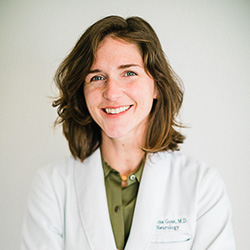
ANA Investigates host and executive producer:
Adeline Goss, MD, Highland Hospital, Alameda Health System
Episode producers and planners are members of the ANA’s Education Innovation Committee.
Recent Episodes
ANA Investigates At a time when support for basic and translational science needs a strong voice and the burden of neurological disease is growing, the ANA is the champion of neurological research and the ally of all physicians and scientists who strive to make a difference through careers that combine discovery, education, and clinical care. From advances in stroke and dementia to movement disorders and epilepsy, the American Neurological Association has been at the forefront of research and practice since 1875 as the premier professional society of academic neurologists and neuroscientists devoted to understanding and treating diseases of the nervous system.
- ANA investigates NORSE and FIRES
 by The American Neurological Association on January 27, 2026 at 4:39 pm
In this episode, we'll focus on new onset refractory status epilepticus or NORSE, and its closely related presentation, febrile and infection related epilepsy syndrome, known as FIRES. NORSE and FIRES are clinical presentations where the evidence is limited, stakes are high, and treatment often has to begin before the diagnosis is clear. They also raise broader questions about how neurology can respond to rare but catastrophic illness, including how patients, families and researchers can work together to move the field forward. For an update on NORSE and FIRES, we spoke with Dr. Howard Goodkin and Dr. Larry Hirsch. Dr. Goodkin is the Shure professor of neurology and pediatrics at University of Virginia. Dr. Larry Hirsch is a professor of neurology at Yale University. They were interviewed by Dr. Ifrah Zawar, assistant professor of neurology at the University of Virginia. Disclosures: Dr. Hirsch has received consultation fees for advising from Ceribell, Natus, & UCB and honoraria for speaking/training from Neuropace & Natus.
- ANA Investigates Emerging Strategies to Enhance Stroke Recovery
 by The American Neurological Association on December 30, 2025 at 1:01 pm
In this episode, we'll explore emerging strategies to enhance recovery after stroke. Stroke rehabilitation has long relied on physical, occupational, and speech therapy, but advances in neuroscience are opening new opportunities to directly modulate brain networks, promote plasticity, and hopefully help patients regain function. Dr. Sean Dukelow's work focuses on neurorehabilitation and the mechanisms of recovery after stroke. He's a professor and head of Physical Medicine and Rehabilitation in the Department of Clinical Neurosciences at the University of Calgary. Dr. Dukelow was interviewed by Dr. Cheran Elangovan, vascular neurologist at University of Tennessee Health Science Center. Series 7, Episode 3 Disclosures: Dr. Dukelow serves on the advisory board for Merz and Ipsen, provides consultation for AbbVie, receives speaker fees from Merz
- ANA Investigates Stroke and its Future: Reflections of a Legend
 by The American Neurological Association on November 25, 2025 at 6:44 pm
Today, we'll talk with one of the true giants of stroke neurology - Dr. Louis Caplan, Professor of Neurology at Harvard Medical School and Senior Neurologist at Beth Israel Deaconess Medical Center. For decades, Dr. Caplan has shaped how we think about stroke. He's authored an enormous body of work -- landmark papers, books, and clinical descriptions that have changed how neurologists around the world recognize and classify strokes. But today, rather than revisiting the past, we'll ask how he sees the future - of stroke, clinical reasoning in an era of AI, and of medicine itself. Dr. Caplan was interviewed by Dr. Sarah Nelson, neurointensivist and Assistant Professor of Neurology at Tufts Medical Center. Series 7, Episode 2 Disclosures: None
- ANA Investigates AI for Clinical Care
 by The American Neurological Association on October 28, 2025 at 1:42 pm
This is episode, we'll look at a national effort to advance clinical research and patient care through artificial intelligence. AI depends on data that are large, diverse, and well-labeled -- in contrast, most clinical data are siloed, inconsistent, and biased toward certain populations. The CHoRUS Network, part of the NIH's Bridge2AI consortium, is standardizing and harmonizing data from many hospitals so they can actually be used for training machine-learning models. Dr. Eric Rosenthal is Contact PI for the CHoRUS Network, Associate Professor at Harvard Medical School, and an epileptologist, clinical neurophysiologist, and neurointensivist at Mass General Brigham. He was interviewed about CHoRUS by Dr. Masoom Desai, neurointensivist at the University of New Mexico and site PI for the CHoRUS Network. Series 7, Episode 1 Disclosures: Dr. Desai disclosed: PI- MAPS-ABI locally funded by CBRR, UNMHSC, Site PI for RAISE, RESET, SAFER-EEG, KeSETT, SHINKEI-TBI trials, Site PI for CHoRUS, Bridge2AI, Site co-PI for ICECAP and Post-ICECAP. Dr. Rosenthal disclosed: Committee service on Bridge to AI and the Curing Coma Campaign
- ANA Investigates ANA2025
 by The American Neurological Association on September 23, 2025 at 2:58 pm
The American Neurological Association's 150th Annual Meeting held in Baltimore September 13-16, 2025 was a milestone meeting celebrating 150 years of progress, discovery, advances in science, and the remarkable work of academic neurologists and neuroscientists over the past century and a half. The meeting—ANA2025—featured outstanding plenary sessions, professional development workshops, interactive lunch workshops, special interest groups, cross-cutting special interest groups, the celebrated poster hall, satellite symposia, and several opportunities to network and connect with colleagues and friends. Dr. Michelle Johansen of Johns Hopkins University School of Medicine, immediate past chair of the ANA Education Innovation Committee, engaged with meeting attendees to learn more about their experience at ANA2025 and what they think about the ANA. Listen in as meeting attendees share their insights, meeting highlights, and enthusiasm for the ANA during Dr. Johansen's boots on the ground interactions with them. From the Presidential Symposium to the closing sessions, learn about ANA2025, the science and research shared, and the reactions of those who were in Baltimore to experience it.